
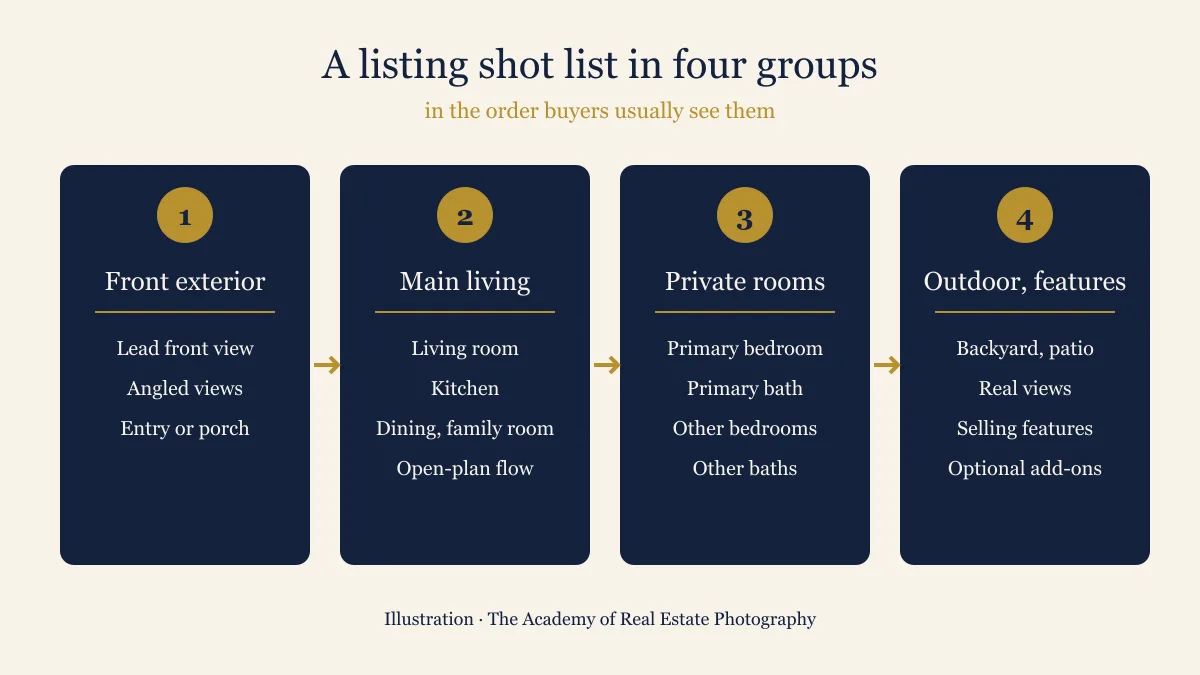
A real estate photography shot list is the written plan for every photo a listing needs, in the order buyers will see them. For most homes it covers four groups: the front exterior, the main living spaces (living room, kitchen, dining area), the private rooms (primary bedroom, other bedrooms, bathrooms), and the outdoor and feature shots (backyard, views, garage, anything that sets the home apart). Agree on the list before shoot day, prepare each room against it, and check it again before the photographer leaves. That keeps the shoot fast and makes sure no room a buyer asks about is missing.
Why agents should write the shot list down
Photos are the part of a listing buyers notice first. In the National Association of REALTORS® 2025 Profile of Home Staging, 73 percent of buyers’ agents said having photos available for a listing was more or much more important to their clients, ahead of physical staging, videos and virtual tours. A written list turns that priority into a plan. It tells the photographer what matters about this particular home, lets the seller prepare the right rooms, and gives you something to check against before the photos go to the MLS.
The shot list, room by room
1. Front exterior
- The main front view, usually the listing’s lead photo
- One or two angled front views that show the side yard, driveway or garage
- The entry or front porch, if it adds something the wide view does not
2. Main living spaces
- Living room: two angles, one from the entry and one showing how it connects to the next room
- Kitchen: a wide view plus one angle that shows the island, counters or eating area
- Dining area and any family room or den
- An open-plan view that shows how the main rooms flow together
3. Private rooms
- Primary bedroom: one or two angles, plus the walk-in closet if it is a selling point
- Primary bathroom: the vanity and the shower or tub
- One photo of each other bedroom and bathroom
- A home office, laundry room or bonus room, when it helps a buyer picture daily life in the home
4. Outdoor and feature shots
- The backyard, patio, deck or pool from the house and from the far side of the yard
- Any real view, framed honestly
- Features the listing description mentions: a fireplace, built-ins, updated fixtures, a garage or workshop
- Optional add-ons: twilight exteriors, aerial photos (the photographer needs an FAA Part 107 certificate to fly for a commercial job), video or a 360 tour
Which rooms deserve the most attention
When time is short, spend it on the rooms buyers care about most. In the same NAR staging report, buyers’ agents named the living room as the most important room to stage (37 percent), followed by the primary bedroom (34 percent) and the kitchen (23 percent). Those are also the rooms worth extra angles, extra preparation and the best light of the day. A small guest bedroom or a hall bathroom usually needs one clean photo, not three.
Prepare each room before shoot day
Send the seller the shot list a few days ahead with a short preparation note for every room on it:
- Clear counters, tables and the floor; put away personal photos, mail and toiletries
- Replace burned-out bulbs and use bulbs of the same color in each room
- Open blinds, make beds and close toilet lids
- Move cars, hoses and trash cans out of the exterior shots
- Keep pets and people out of the rooms being photographed
Preparation in the house is always better than fixing things afterward. If staging is not possible, our guide to virtual staging explains when digital furniture helps and how to disclose it.
Keep the edits honest
A shot list also sets expectations for editing. NAR’s guidance on when photo editing goes too far draws a practical line: removing something movable, like a trash can in the driveway, may be acceptable, while editing out power lines, adding grass where none grows or hiding cracks and repair problems misrepresents the property. Colors should look natural. Put the rule in writing next to the shot list so the photographer, the seller and you agree on it before any photo is edited.
Check the list before the photographer leaves
Walk through the list with the photographer at the end of the shoot. A missed room is easy to photograph while everyone is still there and expensive to fix with a second visit. When you hire a photographer, ask whether they work from a shot list and what their package includes; our article on choosing a real estate photographer covers the other questions to ask. Photographers can use the same list to plan their packages, as in our guide to building a real estate photography rate sheet. For more on what good listing photos do for a sale, see professional photography in property marketing.
Want it editable, with your own logo? The Real Estate Photography Business Kit includes the shot list as an editable document, a room-by-room seller prep checklist you can brand as your own, a booking form with a written editing agreement, and a rate sheet template.
Want to shoot your own listings?
A shot list tells you what to photograph; the skill is in how. The Academy’s online course covers gear, camera settings, lighting, composition and editing in six self-paced modules, and you earn a digital certificate when you pass the final exam.
Frequently asked questions
What photos should every real estate listing include?
At minimum: the front exterior, the living room, the kitchen, the dining area, the primary bedroom and bathroom, each other bedroom and bathroom, and the backyard or outdoor space. Add photos of any feature the listing description mentions, so buyers can see what the text promises.
Which rooms matter most in listing photos?
In NAR’s 2025 Profile of Home Staging, buyers’ agents rated the living room as the most important room to stage, followed by the primary bedroom and the kitchen. Give those rooms the most preparation, the best light and an extra angle.
Who should write the shot list, the agent or the photographer?
Both. The agent knows which features sell the home and what the listing description promises; the photographer knows how long each shot takes and which angles work. Agree on one written list before shoot day.
Is it okay to edit things out of listing photos?
Removing something movable, such as a trash can in the driveway, is generally acceptable. Removing permanent features like power lines, adding grass that is not there, or hiding cracks and repair issues misrepresents the property.

Pingback: Getting Started in Real Estate Photography